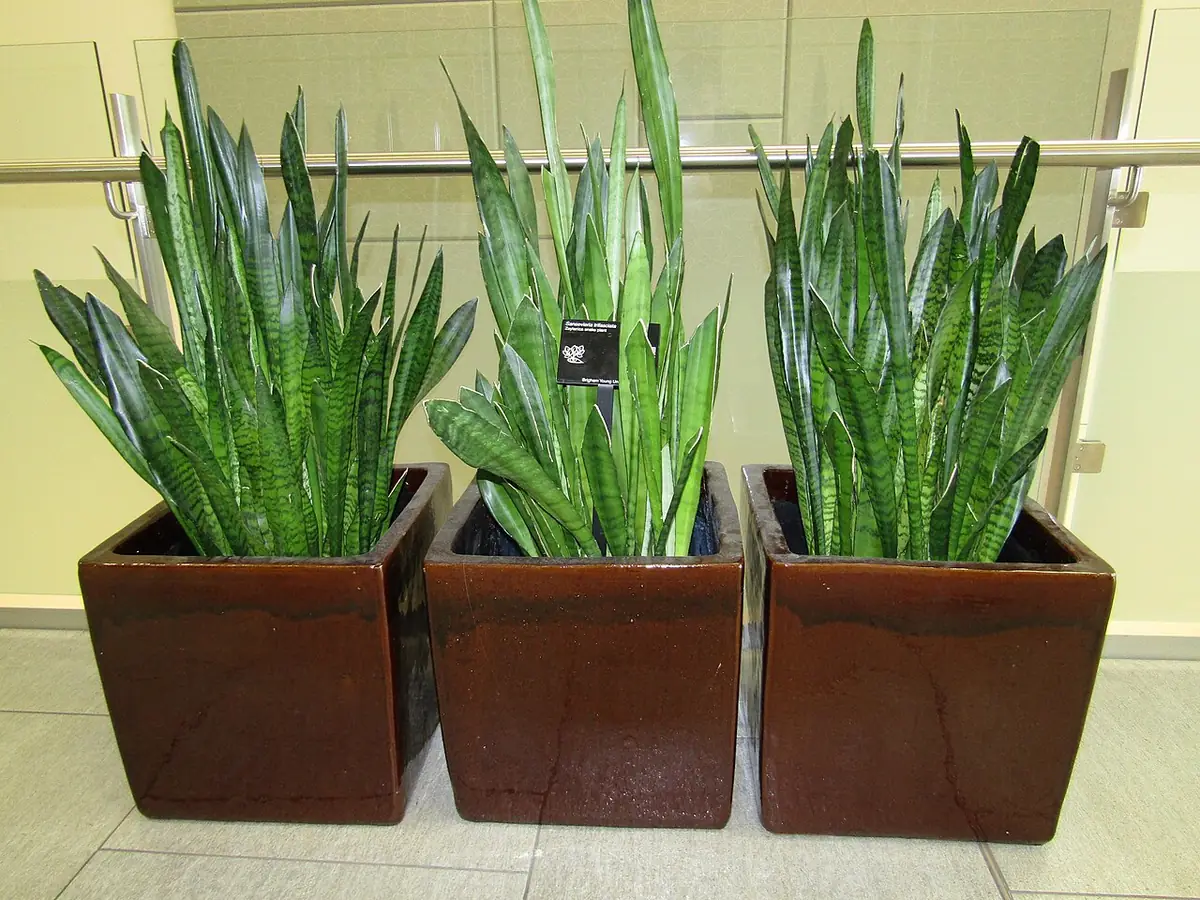
A snake plant should be watered according to the moisture around its roots, rather than on a weekly schedule. Its thick leaves store water, and the mix can remain damp well below a dry surface. Check the pot weight and the lower root zone before deciding. When the mix has dried, water the root ball thoroughly and let excess escape. Repeated small splashes make it harder to tell whether the roots are evenly moist or partly dry.
Read the root zone
Learn the weight of the nursery pot after watering and again when it is dry. Lift only a pot you can handle safely. For a heavy container, use an accessible edge to examine the mix rather than judging by its weight. A wooden probe can provide another clue, but insert it gently and avoid relying on one clean looking tip. Mix composition, root density and the position of the test all affect what you find.
Take the inner pot out of a decorative cover before watering. Water over the mix slowly enough for it to absorb moisture, keeping water out of the leaf cluster where possible. Allow drainage to finish and empty the cover before returning the plant. A container without drainage makes this process much harder to control. Pebbles in its bottom do not create an outlet or protect roots from accumulated water.
Water without trapped runoff
A large pot, cool room and limited window light usually extend the drying interval. A snug pot beside a bright window may dry more quickly while the plant is actively growing. These differences explain why two snake plants in the same home can need water at different times. Use a reminder to inspect them, but let the inspection determine whether watering actually happens. Do not copy the interval from a different season.
Wrinkled leaves are a reason to investigate, not automatic proof of thirst. Dry mix together with a light pot supports a need for water. Soft yellowing tissue, an unpleasant smell or a wet root ball points toward a different problem. A plant with damaged roots may look thirsty because it cannot take up water effectively. Adding another soak to already wet mix can prolong the conditions that caused the decline.
If wet mix persists unusually long, check whether drainage holes are blocked and whether the plant is sitting in runoff. If necessary, gently inspect accessible roots. Firm roots and rhizomes should not collapse under slight pressure. Remove only clearly dead or decayed material with clean tools if repotting is needed, and choose a draining mix appropriate for succulent houseplants. Avoid moving a small root system into a much larger volume of damp medium.
Separate thirst from root trouble
After correcting watering, keep the position stable so the result can be judged. Existing creases, scars or yellow tissue may not disappear. Look instead for firm remaining leaves, the absence of spreading softness and healthy new shoots when growth resumes. Extra fertilizer is not a rescue for waterlogged roots. Feed only as appropriate for active growth and the product instructions, rather than trying to accelerate recovery.
A useful record contains the day you checked, whether the lower mix was dry and whether you actually watered. After several cycles, it will show how your particular pot behaves. If you are leaving home, inspect the plant rather than giving an unnecessary farewell watering. A snake plant in sound condition can often wait longer than a leafy moisture loving plant, but its real drying pattern is a better guide than a promised number of days.