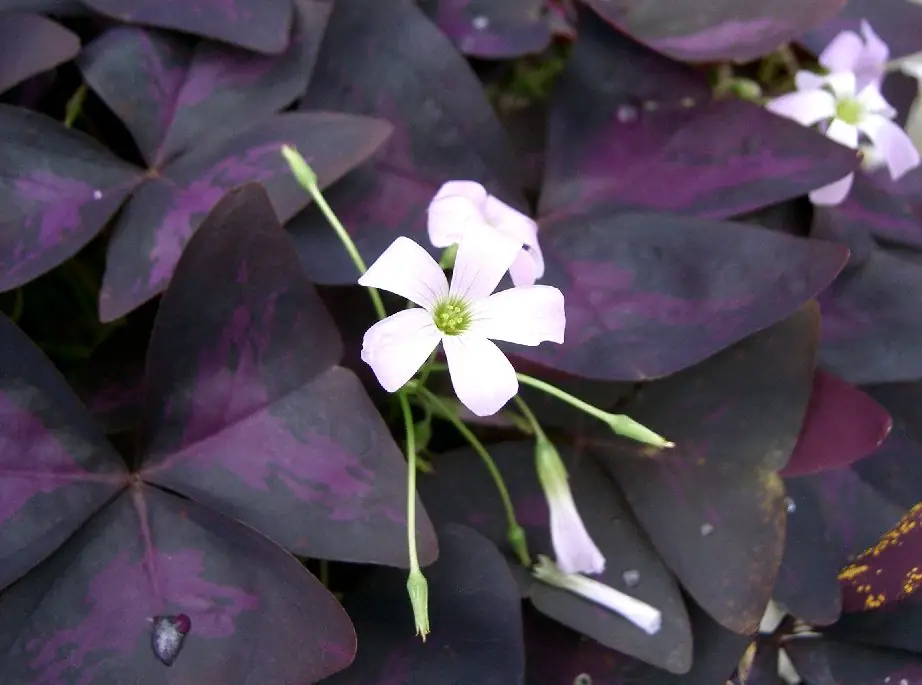
Purple shamrock bulbs can remain alive when the foliage disappears during a rest period. Check for firmness and avoid maintaining the fully watered routine of an actively leafy plant. When fresh growth emerges, restore moisture gradually in a bright position rather than assuming the pot needs to remain permanently dry.
Read the conditions
For light, choose bright light with mild morning sun. Stand at leaf level and look toward the window, since a bright room can still have a surprisingly dim corner. Curtains, outdoor trees and the changing angle of the sun alter the light that reaches Oxalis triangularis. Move a plant toward stronger light in small stages over several days. Sudden exposure can damage foliage before the roots have adjusted to the additional water demand.
Water when the top layer dries during active growth. Test below the surface instead of relying only on how the top looks. A light finger check near the edge, supported by the weight of the pot, is generally more informative than a weekly calendar reminder. For Oxalis triangularis, water slowly over the mix until the root ball is evenly wetted, then allow surplus water to escape. Never leave the inner pot standing in water hidden inside a decorative cover.
Adjust care thoughtfully
Choose a shallow draining pot. Fill it with a loose general potting blend. Drainage holes are necessary, and covering them with a shard or screen must not block their flow. A layer of gravel does not turn a sealed container into a draining one. With Oxalis triangularis, an oversized pot can hold unused wet mix around a small root system, making an otherwise reasonable watering habit difficult to judge.
The most useful practical adjustment is to maintain moderate moisture while leaves are growing and reduce water if all foliage naturally dies back. Do that before making several other changes at once. Give Oxalis triangularis a period of stable care afterward so you can see the response in new growth. Keep a brief note of the change and the moisture condition on that day. A photograph from the same angle can reveal small improvements that are difficult to remember from one week to the next.
When assessing a problem, remember that folded leaves at night are normal, whereas sudden collapse in wet soil needs a root inspection. Inspect the underside of a leaf and the point where each stem meets the mix. For Oxalis triangularis, compare the condition of older foliage with the youngest leaf rather than judging the whole plant by one blemish. Damaged tissue rarely becomes perfect again, so healthier new growth is often a more useful sign that an adjustment is working.
Observe the next change
For routine upkeep, allow dormant bulbs a drier rest and resume watering when fresh shoots appear. Use clean scissors when a cut is needed and avoid removing a large amount of healthy foliage during an adjustment period. Feed Oxalis triangularis only when it is growing and follow the houseplant fertilizer label for concentration and frequency. Dry roots or a stressed plant do not benefit from an extra strong feed. If pale deposits collect on the mix, assess accumulated salts before adding more nutrients.
One detail worth keeping in mind is that a pause in growth does not automatically mean the bulbs have died. Place Oxalis triangularis where leaves are not repeatedly brushed by a door, a curtain or moving furniture. Avoid direct hot or cold airflow. Plants that are safe to handle for routine care are still best kept beyond the reach of small children and pets unless their suitability has been independently confirmed. Wash hands after handling potting mix and put tools away after use.