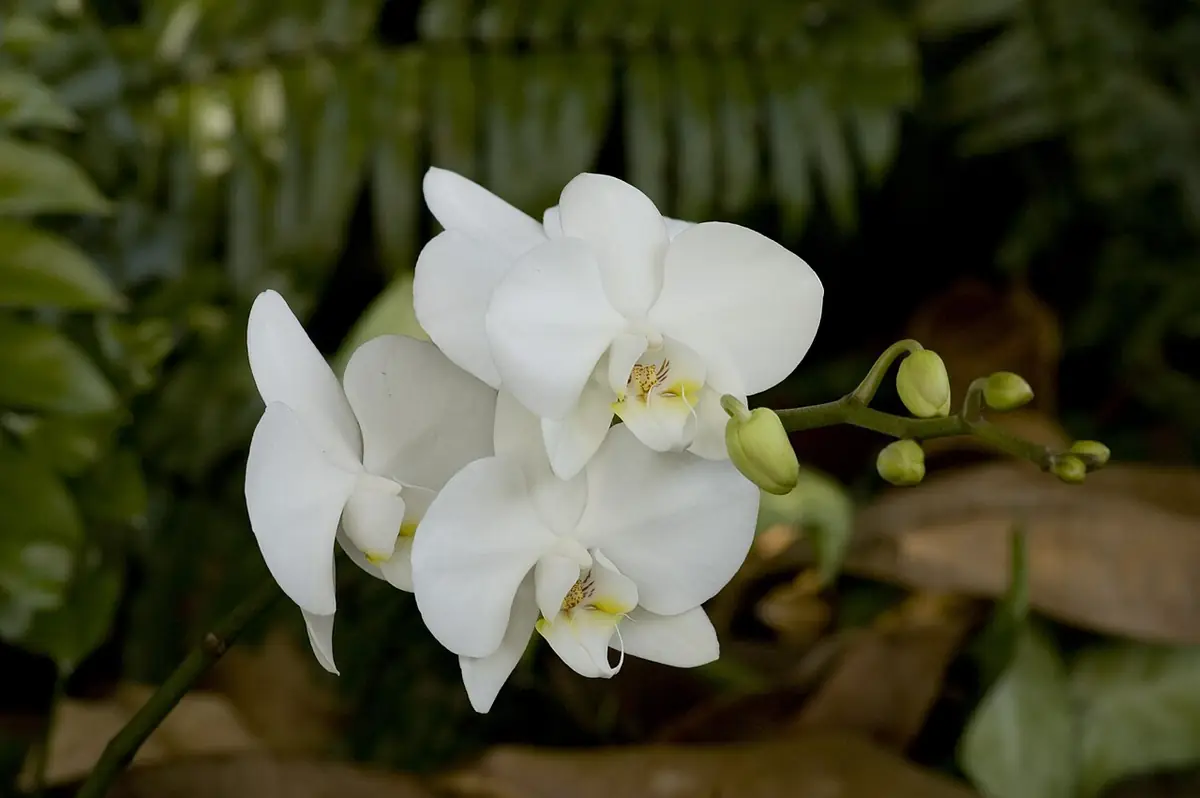
For a moth orchid, visible roots are useful watering clues, but they are not the whole decision. Check the moisture inside the growing medium and the weight of the pot as well. Firm exposed roots often look pale or silvery when dry and greener after wetting, while roots hidden from light can have a different color. This guide concerns Phalaenopsis grown in an airy orchid medium; other orchids may have different moisture requirements.
Identify the orchid and medium
First identify what fills the pot. Coarse bark, fine aged bark and tightly packed moss hold water differently. The surface can look dry while a central plug stays wet. Look through a transparent pot when available and gently check accessible medium without pulling roots apart. A decorative cover can hide both water and poor air movement. Remove the inner pot for inspection so that trapped runoff does not distort your assessment.
Compare several roots instead of treating one green or brown root as a verdict. Firmness matters: sound roots resist gentle pressure, whereas dead roots may be hollow or soft. Aerial roots can dry faster than those inside the pot and do not require the entire root ball to be watered each time they become pale. Roots growing outside the pot are not automatically a sign that the plant urgently needs a larger container.
Read several moisture clues
When the medium is approaching dryness and the pot is noticeably lighter, water it evenly with water at a comfortable room temperature. Avoid water collecting between the leaves at the crown. Let the liquid run freely from the holes before putting the plant back. If you use immersion, keep the crown above water and use clean water for each plant rather than sharing a bath that could transfer a problem between pots.
Do not leave the orchid standing in its decorative cover after watering. Return to check the bottom if the pot was especially wet or drainage was slow. Moth orchid roots need access to air as well as moisture. A dense old medium that stays saturated may need replacement with an appropriate orchid mix. Ordinary heavy garden soil is unsuitable, and a layer of stones cannot fix a container with no drainage outlet.
Wrinkled leaves can result from insufficient water reaching the plant, including situations where wet conditions have damaged roots. Check before soaking again. If root loss is suspected, examine the plant gently and remove only clearly dead tissue with clean tools when repotting. Keep sound roots, even if they are an unfamiliar color. A smaller surviving root system needs a suitably sized pot rather than extra wet medium around it.
Protect roots after watering
After watering, note how the pot changes over the following days. Bright filtered light, warmth, airflow and the stage of growth influence drying. A plant by a cool winter window can stay moist far longer than one in a warm bright room. Use the pattern to choose when to inspect again, but do not turn a previous seven day interval into a rule. Fresh bark can also behave differently from the old material it replaced.
Evaluate progress through firm roots, an intact crown and steady leaf growth. An old flower spike fading after flowering does not by itself mean that watering has failed. Leaf damage and lost roots take time to replace, so avoid frequent unpotting to look for results. If the orchid is not a Phalaenopsis, confirm its identity before using this routine. A helpful care plan begins with the right plant and medium, rather than one universal orchid schedule.