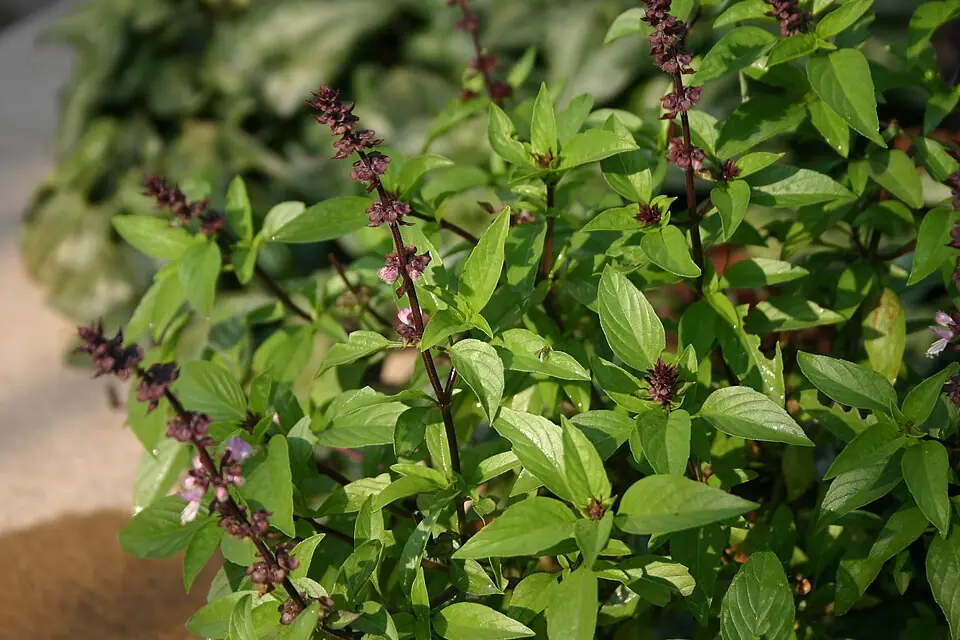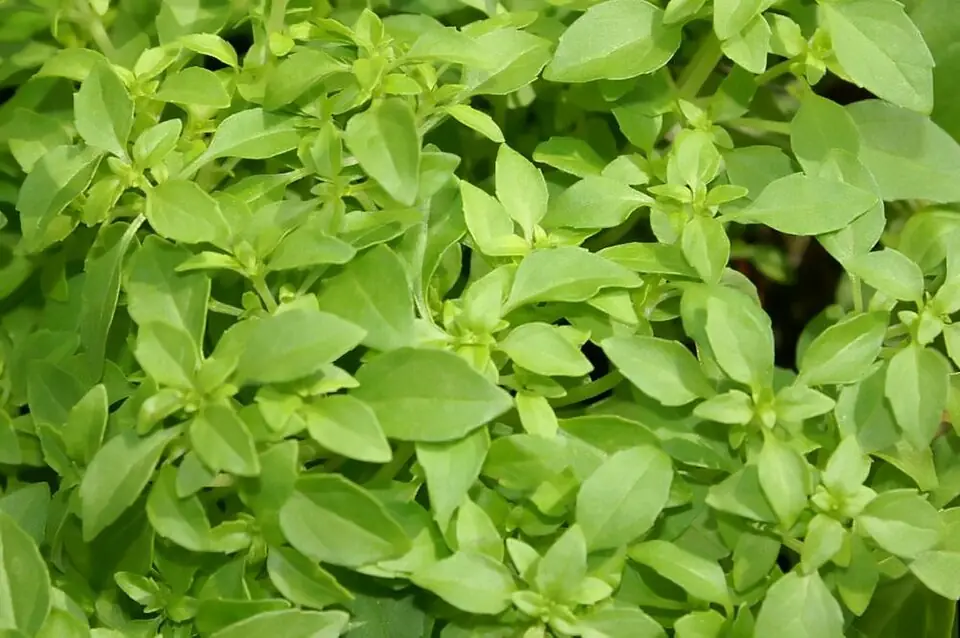
To make sweet basil branch, remove a soft growing tip just above a healthy pair of opposite leaves. Leave those leaves and the small buds at their bases in place, because they support the next side shoots. Taking random individual leaves from the bottom does not shape the plant in the same way. Begin with an established, actively growing basil plant rather than a newly transplanted seedling that is still trying to settle its roots.
Find the right cutting point
Look down the main stem before cutting. You should be able to identify several pairs of healthy leaves and a soft upper section. Choose a point that leaves a useful leafy framework instead of cutting the plant almost to the soil. A small basil with only a few leaves needs time to grow first. Weak growth caused by poor light or cold conditions should be corrected before repeated harvesting is used to encourage a bushier appearance.
Use clean scissors or a careful pinch that does not tear down the stem. Make the cut close above the chosen leaf pair without crushing the buds. Examine the remaining shoots afterward and remove only the intended tip. The cut material can be used as a kitchen harvest if the plant is clearly identified as culinary basil and has been grown with products suitable for that use. Wash harvested leaves as appropriate before food preparation.
Support new branches
Give the plant a warm, bright position suited to basil. A kitchen shelf several feet from the window may be convenient for cooking but too dim for vigorous replacement growth. Observe the actual light and introduce stronger exposure gradually. Outdoors, wait for suitable warmth rather than relying on a date that applies to another region. Cold nights can slow basil even when the daytime patio feels pleasant enough for people.
Keep the root ball evenly supplied with moisture while allowing surplus water to drain. Newly purchased supermarket basil often contains many seedlings in a small pot, so rapid wilting can reflect crowding rather than a need to pinch more stems. Inspect the root space and decide whether to separate manageable groups or move the plant to a suitable container. A sealed decorative pot makes the watering balance harder to control and can conceal runoff.
After the first cut, allow the side shoots to extend and form their own healthy leaf pairs before taking another tip. Rotate your harvest around the plant instead of removing all growing points at once. A modest supply of leaves taken regularly is easier for a small plant to replace than an occasional severe stripping. If the plant cannot replenish what you use, grow another pot rather than feeding the first one excessively.
Harvest without exhausting the plant
Flower buds signal a change in growth priorities. If continued leaf production is your aim, remove emerging flower tips while leaving healthy leafy shoots below them. This will not keep a plant productive forever or reverse the effect of unsuitable temperatures. Older woody basil may become less vigorous even with careful cutting. Starting another small batch while the current pot still provides leaves can make the kitchen supply more dependable.
Judge the method by branching and healthy replacement leaves, rather than expecting an instantly rounded plant. If stems stretch with widely spaced leaves, check light before making the next cut. If leaves yellow in wet mix, inspect drainage instead of adding fertilizer automatically. Keep a note of where each cut was made and how the side buds respond. That observation turns pinching into a deliberate growing decision rather than a fixed weekly task.